
Trance in 2026: A Genre That Refuses to Stand Still
There is a particular contradiction at the heart of Trance in 2026.
The genre is deeply connected to its past, yet many of the sounds emerging around it are anything but nostalgic.
For decades, Trance has been defined by certain familiar ideas: emotional melodies, extended builds, atmospheric breakdowns, powerful drops and the feeling of being taken somewhere rather than simply being played a song.
Those fundamentals have not disappeared.
What has changed is the environment around them.
The modern Trance scene exists inside a much larger electronic ecosystem. Progressive, melodic, techno, house, harder styles and experimental electronic music constantly cross paths. Producers have access to more tools than ever, listeners discover music through more platforms than ever, and the boundaries between scenes are becoming increasingly difficult to draw.
The result is not necessarily a return to an older version of Trance.
It may be something more interesting: a new interpretation of what Trance can be.
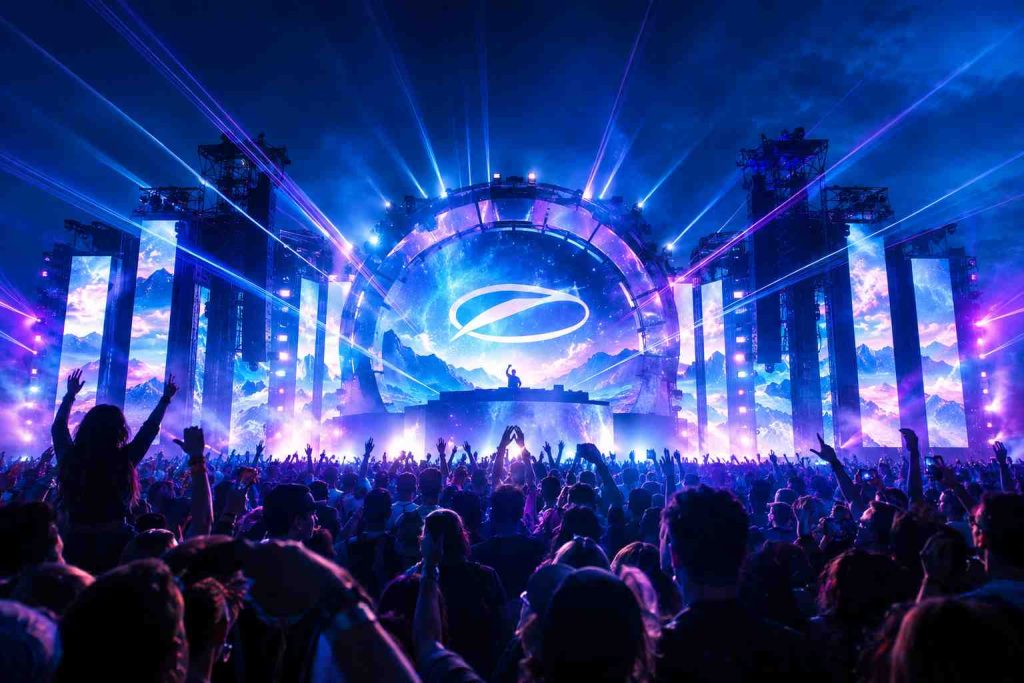
The Trance Scene Is Becoming More Connected
One of the clearest developments in electronic music is the increasing movement between genres.
SoundCloud’s 2026 Music Intelligence Report describes electronic music as an increasingly diverse and interconnected space, with regional scenes combining electronic foundations with local musical cultures. The report also points to growing activity around different electronic styles and increasing cross-border discovery.
That matters for Trance because the genre has always depended on exchange.
A Trance producer might borrow a bassline approach from progressive music, a percussion idea from techno, a vocal texture from ambient music or a sound-design technique from another electronic style.
The label on the release might still say “Trance.”
But the production language can be much wider.
This is particularly important for younger producers.
Instead of asking whether a track sounds exactly like a particular era of Trance, many producers are asking a different question:
What can I take from Trance and combine with the music I already love?
That shift can make the genre harder to define—but potentially easier to reinvent.
Why Melody Still Matters
Technology changes quickly.
The emotional function of a melody does not.
For Trance, melody remains one of the most important tools for creating identity. A kick can make a track work in a club. A powerful bassline can create movement. Sophisticated sound design can make a production impressive.
But a memorable melodic idea can make a track stay with the listener.
This is one reason the emotional side of Trance continues to matter even when production styles change.
The modern producer has access to enormous sample libraries, synthesizers, effects and increasingly sophisticated production software. The challenge is therefore not simply creating more sounds.
It is deciding which sound deserves to remain.
A strong Trance production does not necessarily need hundreds of layers.
Sometimes the most effective arrangement is built around a small number of carefully chosen elements that have enough space to communicate.
For producers working in Uplifting Trance, this is particularly relevant.
The breakdown needs to create anticipation.
The melody needs to earn the emotional release.
And when the kick and bass return, the drop needs to feel like a development of the musical story rather than simply a louder section.
Uplifting Trance Is Finding New Contexts
Uplifting Trance has traditionally been associated with emotional breakdowns, soaring melodies and high-energy drops.
Those characteristics remain recognizable.
But the context around them is changing.
The wider electronic scene is becoming increasingly comfortable with melodic and emotional music appearing alongside harder club sounds.
SoundCloud’s 2026 report specifically identifies Uplifting Trance among the electronic styles appearing within Europe’s evolving dance-music landscape.
That does not mean every electronic listener is suddenly becoming a Trance fan.
It means the walls separating electronic subcultures are becoming less rigid.
A listener might discover a melodic track through a progressive playlist, hear a Trance record in a festival set, find a producer through a DJ mix and then explore an entire catalogue.
Discovery no longer has to follow genre categories.
It can follow sound.
And that could be particularly valuable for Trance.
The New Trance Audience May Discover Music Differently
For years, discovering electronic music often meant going to a record store, following a DJ, buying a compilation or listening to radio shows.
The digital era changed that.
Today, discovery can happen through a DJ set uploaded online, a short preview, a recommendation algorithm, a label channel, a fan repost or a producer sharing an unreleased track directly with listeners.
SoundCloud’s 2026 data illustrates how important new music remains to its audience. In the United States, SoundCloud users devote a significantly larger share of their listening to current music than the wider industry benchmark cited in the report.
The platform also reported a 39% year-over-year increase in uploads tagged #DJSET in 2025, highlighting the importance of mixes and performance recordings in electronic music discovery.
For Trance, that creates an interesting opportunity.
A producer does not necessarily need to wait for a major compilation or radio show to introduce a track to an audience.
A strong DJ set, a studio preview or a well-presented release can become part of the discovery process immediately.
Festivals Still Give Trance a Physical Identity
For all the changes happening online, Trance remains a genre built around physical experiences.
A breakdown heard through headphones can be emotional.
A breakdown heard in a field with thousands of people waiting for the drop is something else.
That collective experience remains one of the strongest parts of Trance culture.
In 2026, A State of Trance reaches its 25th anniversary, marking a significant milestone for one of the genre’s most recognizable global brands. The 2026 celebrations include events in Rotterdam and further international dates.
The significance of that anniversary is not simply the number.
Twenty-five years means multiple generations have encountered Trance through the same cultural ecosystem.
Someone who discovered the genre in the early 2000s may now be attending events alongside listeners who discovered it through streaming platforms years later.
Different generations can arrive at the same breakdown from completely different musical journeys.
That is one of the unusual strengths of Trance.
The Label Still Matters
Streaming has changed how listeners find music, but labels continue to play an important role in defining scenes.
A good label is more than a distributor.
It can function as a filter.
It tells listeners:
If you like this record, there is a good chance you will understand the next one.
That creates musical identity.
Solarstone’s Pure Trance ecosystem is one example of how a Trance-oriented label network can continue to operate across different shades of electronic music. In a 2026 interview, Solarstone described several active imprints covering Pure Trance, progressive, harder Trance, breaks and more experimental electronic territory.
This is important because it demonstrates something larger than one artist or label.
The modern Trance ecosystem does not necessarily need one single sound.
It can contain several related musical languages.
That diversity may actually help the scene remain active.
Production Is Becoming More About Taste Than Technology
There has never been a better time to learn music production.
There has also rarely been a time when it has been easier to become overwhelmed by technology.
A modern producer can open a DAW and immediately access thousands of sounds, effects, presets and production tools.
But access to tools does not automatically create musical identity.
That is where taste becomes important.
Two producers can use the same synthesizer and create completely different records.
The difference may come from:
- melody
- arrangement
- sound selection
- dynamics
- harmonic choices
- restraint
- mixing decisions
- emotional timing
For Trance producers, this is especially important because the genre relies heavily on progression.
A breakdown is not powerful simply because it is loud or contains a large number of layers.
Its effectiveness depends on what came before it.
The same is true for the drop.
A great drop is often the result of everything the producer decided not to reveal earlier.
Pourya’s Take: The Most Important Element Is Still the Emotion
From a producer’s perspective, I think the biggest challenge in modern Trance is not making the track sound bigger.
It is making the listener feel something.
Production technology has become incredibly powerful. It is possible to make a track extremely wide, extremely loud and extremely detailed.
But none of those things automatically create an emotional connection.
When I work on Trance music, I think about the relationship between the melody, the rhythm and the progression of the track.
The breakdown should have a reason to exist.
The main melody should communicate something.
And the drop should feel like the natural answer to everything that happened before it.
For me, this is where Trance still has a unique advantage.
The genre gives producers enough space to tell a story.
You can start with almost nothing, gradually introduce harmony and atmosphere, create tension, remove the rhythm, allow the melody to breathe—and then bring the energy back.
That emotional journey is difficult to replace with technology alone.
A More Diverse Trance Future
The future of Trance probably does not depend on everyone agreeing about what Trance should sound like.
It may depend on the opposite.
The genre can remain recognizable while allowing producers to approach it from different directions.
One producer might focus on classic Uplifting Trance.
Another might combine Trance melodies with progressive structures.
Another might move toward harder club sounds.
Another might explore atmospheric and cinematic textures.
And another might use completely different production influences while keeping the emotional architecture of Trance.
That does not necessarily weaken the genre.
It can expand its vocabulary.
The broader electronic landscape is already moving in this direction. SoundCloud’s current data shows electronic music becoming more diverse, more geographically connected and increasingly influenced by interactions between different scenes.
The interesting question is therefore not whether Trance will remain exactly the same.
It won’t.
The more useful question is:
Which parts of Trance are worth carrying into the future?
The answer may be simpler than expected.
The melody.
The atmosphere.
The progression.
The connection between producer and listener.
And above all, the feeling that a few minutes of music can take you somewhere else.
What This New Era Could Mean for Trance Producers
For producers, this changing environment creates both freedom and responsibility.
There is more room to experiment, but also more music competing for attention.
A track therefore needs more than technical quality.
It needs identity.
That could mean developing a recognizable melodic language, creating a distinctive sound palette or simply learning how to arrange a record so that every section serves the emotional direction of the track.
For emerging artists, this may be one of the most useful lessons from the current Trance scene:
Do not try to sound like everyone else in the genre. Learn why the music works, then find your own way of expressing it.
The labels, festivals and platforms can help create discovery.
But the music itself still has to give the listener a reason to stay.
Final Thoughts: Trance Is Not Coming Back — It Is Moving Forward
There is a temptation whenever Trance becomes more visible to describe the moment as a “comeback.”
But that description can be misleading.
Trance never completely disappeared.
The scene continued through labels, DJs, producers, festivals, radio shows, clubs and dedicated listeners.
What appears to be changing in 2026 is the context around the music.
Electronic music is growing across platforms. Genres are interacting more freely. New listeners are discovering music through different routes. Established Trance institutions are reaching important milestones, while producers continue to experiment with new sounds and structures.
So perhaps the better way to describe Trance in 2026 is not as a revival.
It is an evolution.
The genre is carrying its emotional history into a musical environment that looks very different from the one in which it was born.
And if Trance has survived for this long, its greatest strength may be exactly that ability:
to change without losing the feeling that made people fall in love with it in the first place.
FAQ
What is happening to Trance in 2026?
Trance continues to evolve within a broader electronic music environment, with increasing interaction between Trance, progressive, melodic and other electronic styles. Current SoundCloud data also points to multi-year growth in Trance and House listening in the UK.
Is Uplifting Trance still relevant?
Yes. Uplifting Trance remains part of Europe’s active electronic landscape, while producers continue to experiment with melodic and emotional approaches to the style.
Why are Trance producers experimenting with other genres?
Digital production makes experimentation easier, while electronic scenes increasingly influence one another. This allows producers to combine Trance’s melodic and emotional characteristics with different rhythms, arrangements and sound-design approaches.
Is Trance becoming more popular again?
Current platform data shows growth in Trance and House in the UK and broader growth in electronic music. These figures indicate increased activity and listening, but they do not by themselves establish a universal global “Trance revival.”
What makes Trance different from other electronic genres?
Trance is particularly associated with emotional melodic writing, extended progression, atmospheric breakdowns and the relationship between tension and release. Individual subgenres can differ significantly, but these elements remain central to much of the music.
- Trance in 2026: A Genre That Refuses to Stand Still
- Trance Radar: 5 Stories Shaping the Trance Scene This Week
- Trance Music News: 5 Major Electronic Music Stories This Week
- Eternal Horizon: When Old School Friends Reunite Through Music
- Pourya Feredi & Kourosh Dabiri Deliver “Colors” on Futurising Music Limited’s Ascension Vol. 1
EXTERNAL LINKS
- SoundCloud — Music Intelligence Report 2026: دادههای مربوط به رشد موسیقی الکترونیک و تغییرات صحنههای موسیقی. SoundCloud Music Intelligence Report 2026
- SoundCloud — Rising Electronic Tides: جزئیات مربوط به رشد Electronic، Uplifting Trance و تعامل بین ژانرها. SoundCloud Rising Electronic Tides
- SoundCloud — Top Growing Genres: اطلاعات مربوط به رشد Trance و House در UK. SoundCloud Top Growing Genres
- A State of Trance 2026: اطلاعات مربوط به بیستوپنجمین سال ASOT.
- Pure Trance / Solarstone interview: برای بخش مربوط به ساختار فعلی لیبلها و تنوع Trance. Pure Trance — Solarstone 2026 Interview